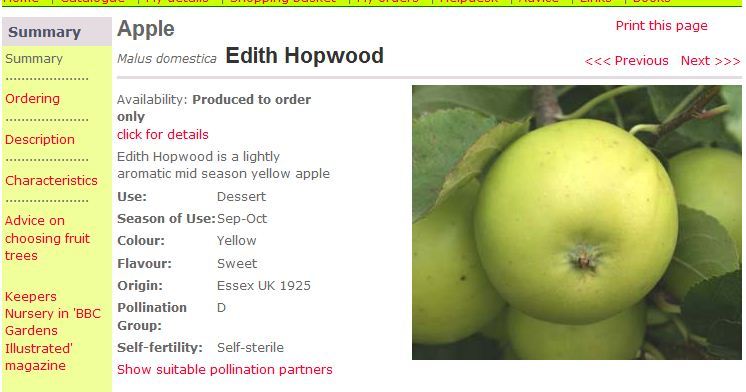
Edith is an English apple variety. I was struck by the name for a reason that will be obvious to a few (very few) of my gentle readers. A company called Frederica’s Cards Ltd., Bath ( www.fredericascards.co.uk ) publishes cards and wrapping paper etc, and has among its wares a poster with lots of apple names. I bought one of these at the Christchurch Art Gallery to give to someone (but as it turns out I kept it. That often happens).
Anyway, I was tempted to write down the name of every single variety featured on the poster but I decided that that was too much like hard work, and unnecessary and (possibly) a bit nutty.
The following is a litlle selection of some apple names that took my fancy: Archimedes, Blood of the Boyne, Colwall Quoining, Dick’s Favourite, Eady’s Magnum, Fugglestone Pippin, Gloria Mundi, Hereford Beefing, Isaac Newton, Julgrans, King of Tomkins County, Lord Kitchener, Missing Link, Northern Spy, Oxford Yeoman, Pig’s Snout, Queen Mary, Roundway Magnum Bonum, Scilly Pearl, Ten Commandments, Upton Pyne, Vicar of Beighton, White Flanders and Young’s Pinello. It appears that there are no apple names starting with ‘z’.

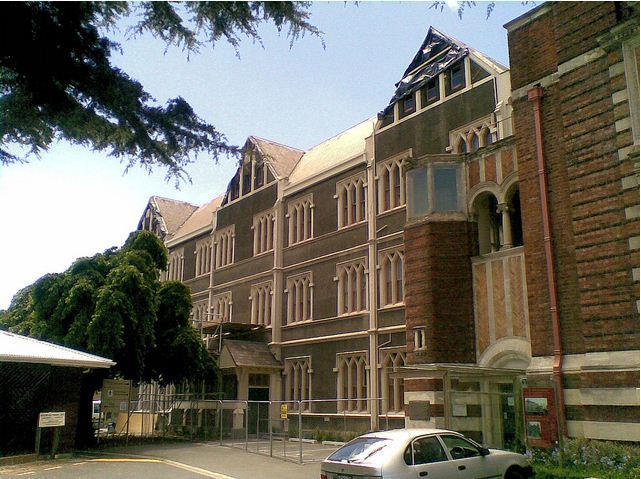
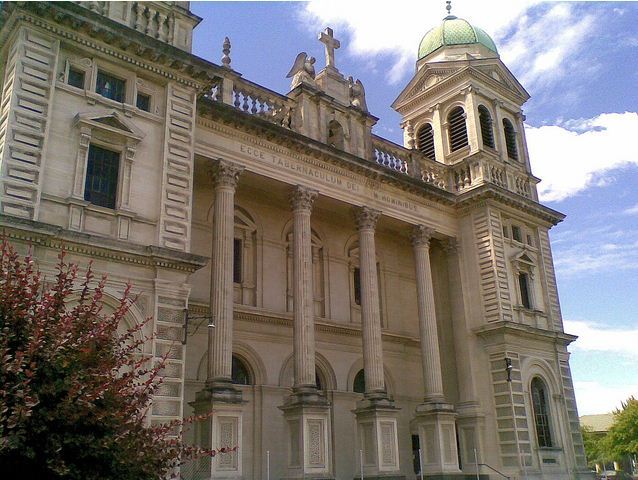
The Cathedral of the Blessed Sacrament (opened on the 12th February 1905) in Barbadoes Street is built in the Renaissance style, the work of architect Francis Petre. I believe it was paid for by the piss-poor of the city.The cathedral so impressed George Bernard Shaw* that he hailed its architect as ‘the New Zealand Brunelleschi’. It is now closed to the public after being badly damaged in the earthquakes, and, in particular, the Boxing Day shock. Next door to the cathedral is the Christchurch Music Centre which is an unusual (for Christchurch) building in the Byzantine Revival style, by the architect J. Munning. The old convent (also damaged) is in the Neo-Gothic style, as are many other Christchurch buildings.
* His impression of NZ–‘Altogether too many sheep.’
UPDATE: Top set of photos include the window of the Music Centre (in the Byzantine Revival style), the plaque on the building and one of the carvings on the doorway.



Just something that struck me. I thought I’d mention it. (It’s a bit hard to see, granted).
A 19th Century Photographer in New Zealand.
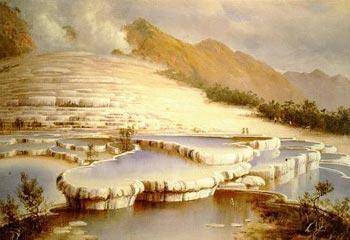
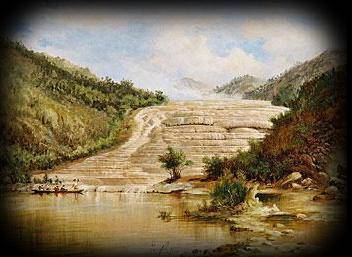
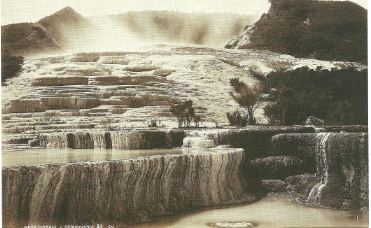
George D. Valentine (1852–1890) arrived in NZ from Scotland in 1884 and won widespread acclaim for the artistic quality (that’s not my phrase) of his landscape photography. He is recognised as creating some of the finest images of Otukapuarangi (fountain of the clouded sky) and Te Tarata (the tattooed rock) — the celebrated Pink and White Terraces — shortly before their destruction by the eruption of Mount Tarawera in 1886. His post-eruption landscapes are an unparalleled record of the devastation and loss.
The black and white photograph is by George Valentine: ‘The White Terrace, Lake Rotomohana’ 1885. The others are works by Blomfield. (NB. For technical reasons I have omitted the macrons that should be shown over the O and u in Otukapuarangi).
Pretty well everyone knows ( I think) the part in Hamlet when poor old Ophelia says ‘Rosemary, that’s for remembrance…’. And who doesn’t know that line of Burns (not very inspired, I’m afraid):” My luv is like a red red rose…”?
Now, I am fond of gardens and garden lore, and I like bits about flowers in literature, and I like botanical prints and garden books and pretty flowers in vases. From time to time I have toyed, rather vaguely, with the notion of being a botanist. My myopia, however, isn’t very helpful when it comes to peering down a microscope so that makes it all a bit complicated. So I am not one. And I have a garden though my fingers aren’t truly green like my mother’s. But I like to potter in the garden and look at the shadows and stare into space. And I have always enjoyed ‘The Language of Flowers’ and I think the little poem (written in August 1913) in the front of the copy my late mother-in-law got from Touchwood Books is quite sweet.
There is a language, “little known”,
Lovers claim it as their own,
Its symbols smile upon the land,
Wrought by Nature’s wondrous hand,
And in their silent beauty speak
Of life and joy, to those who seek
For Love Divine and sunny hours
In the language of the flowers
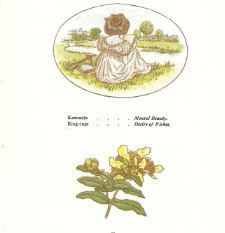
Justicia (that funny-looking thing below) signifies ‘the perfection of female loveliness’. Try starting there.There might be a bunch at the service station. [The generic name honours Scottish horticulturist James Justice (1698-1763).]

(Picture courtesy of Wikipedia, the useful oracle).
(From ‘Corsair,’ published Feb 1814):
There is a war, a chaos of the mind,
When all its elements convulsed, combined,
Lie dark and jarring with perturbed force,
And gnashing with impenitent Remorse —
That juggling fiend, who never spake before
But cries ‘I warn’d thee!’ when the deed is o’er. . . .
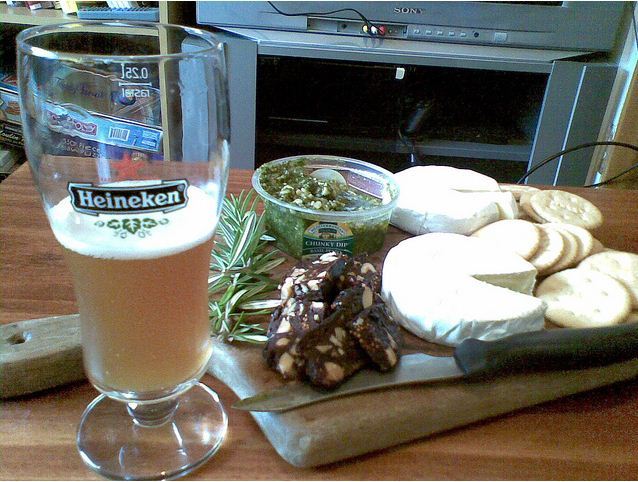
It’s hard to know what’s really important these days. I think my general contention that we are doomed is not unknown to my dear gentle readers. I am not wrong on this but while I’m waiting for the inevitable to happen I occasionally require a bite and a sup, and sometimes I have had occasion to record the contents of the biting and supping etc. It’s a sort of failing, really. I do think it’s important to have them.
(I poach my eggs a la Elizabeth David).
I’ll take a picture of my fish knives soon.







This expression, a classic Australianism, was regularly heard by me in my youth. I don’t think I would have said it myself very often though. My mother would have complained about me being ‘bushy’. This is something one cannot afford to be when one lives in the bush.
The phrase was sometimes used in conjunction with ‘starve the lizards’. According to ‘The Dinkum Aussie Dictionary’ (1986) by Crooked Mick of the Speewa (!) these expressions denoted amazement at events good or bad but have no real meaning whatsoever.
However I have been reading ‘A Celtic Book of Days’ and the entry for the 6th of February reads:
In early February unmarried girls throw stones at scald crows to discover from which direction their husbands will come. If the bird doesn’t move they are destined to remain spinsters.
The black-and-grey hooded or scald crow (Irish, Feannog, Latin, Corvus corone cornix) evolved separately from the carrion crow during the last Ice Age and followed the retreating ice northward: nowadays it is a common sight in Ireland and North-West Scotland and rare elsewhere. Though it may differ from the black crow in plumage and in having more sociable habits, its reputation is no better: scald crows are the emblem of Macha, one of the three sisters who make up the Mor-rioghanna, goddesses of battle and carnage.
‘Macha’s fruit-crop is the heads of those slaughtered.’ from the Yellow Book of Lecon, Irish, fourteenth/fifteenth centuries, edited by Whitley Stokes.
So now, what to think.
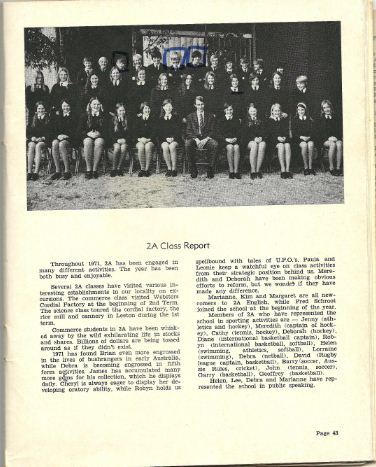
A report on 2A (Year 8) at NHS in 1971. It is perhaps a little difficult to read here. No matter. I don’t remember who wrote this and I don’t remember most of the people. I suppose it isn’t a dreadful disgrace to forget some people in forty years. ( I am in the middle row, 4th from the right).
And yes, that does say I was ‘captain of hockey’. I had that high office thrust upon me. I did not seek it. And, in the intervening forty years, there has been no other occasion, in any area, when such a thing has been done to me, nor have I sought for any such.
The name of the magazine (inspired) refers to the school’s colours–maroon and gold. These colours do not flatter anybody.

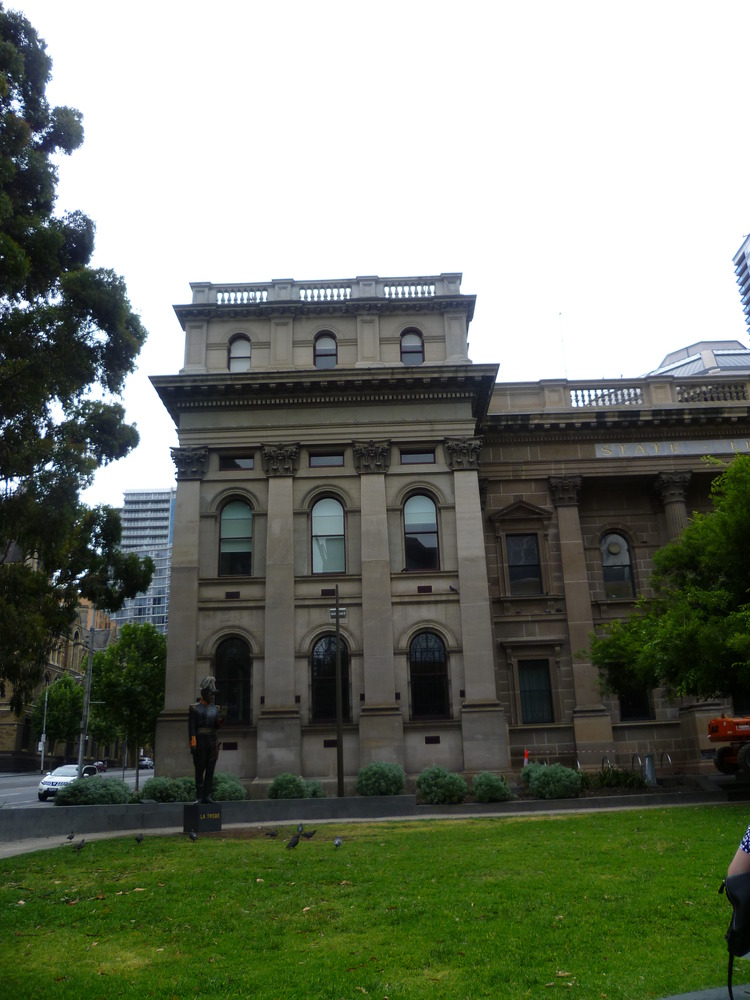
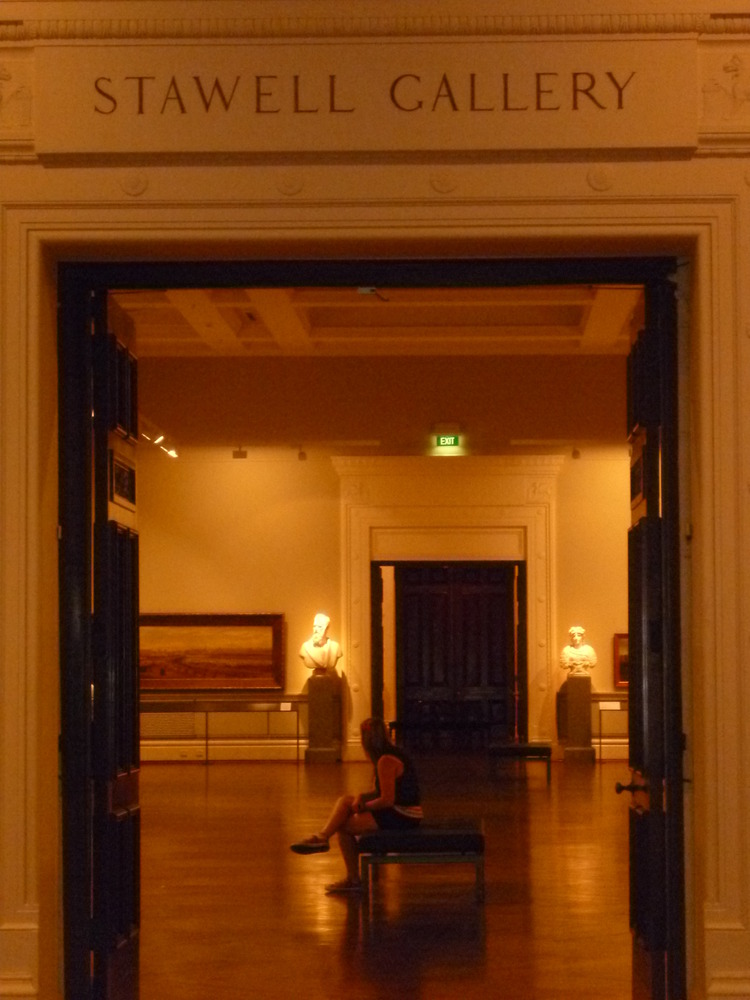
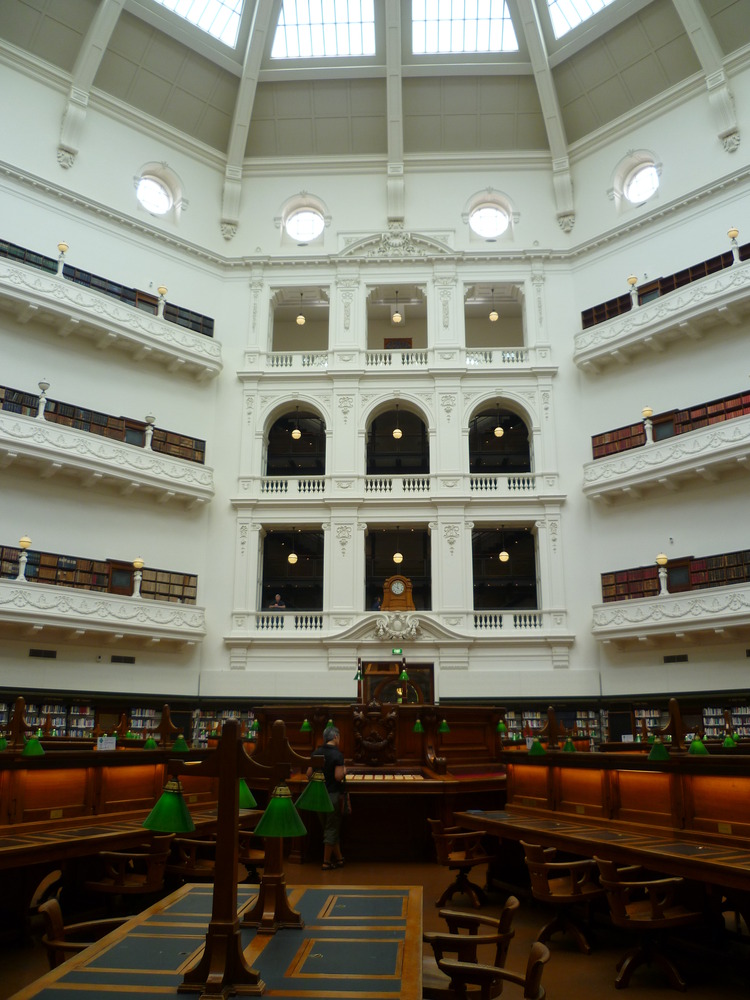
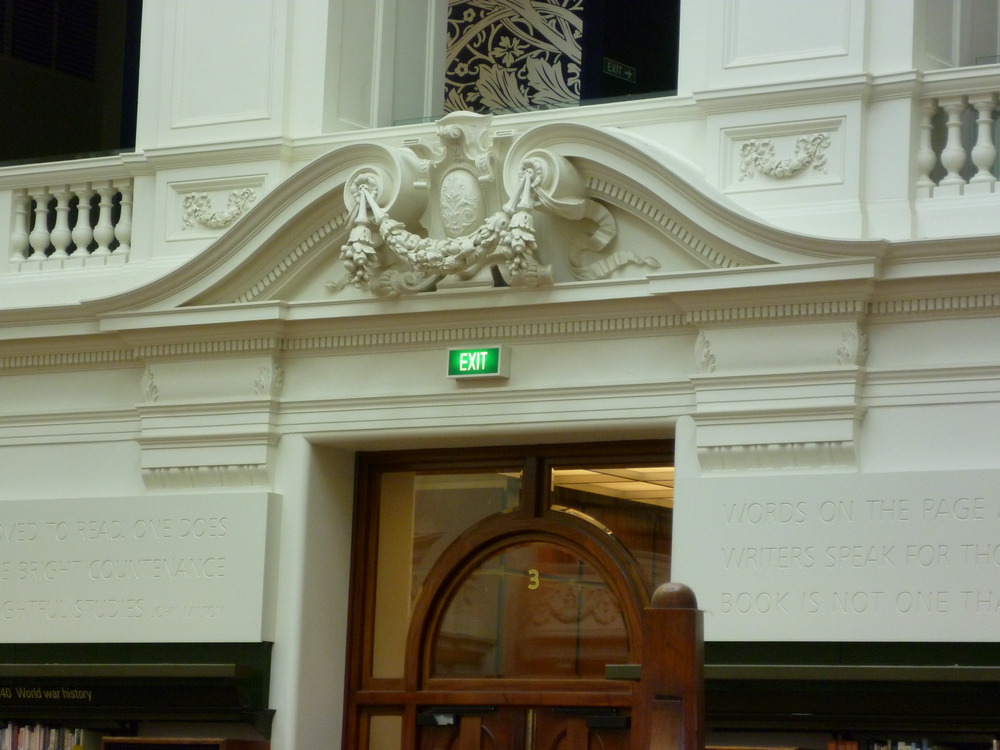
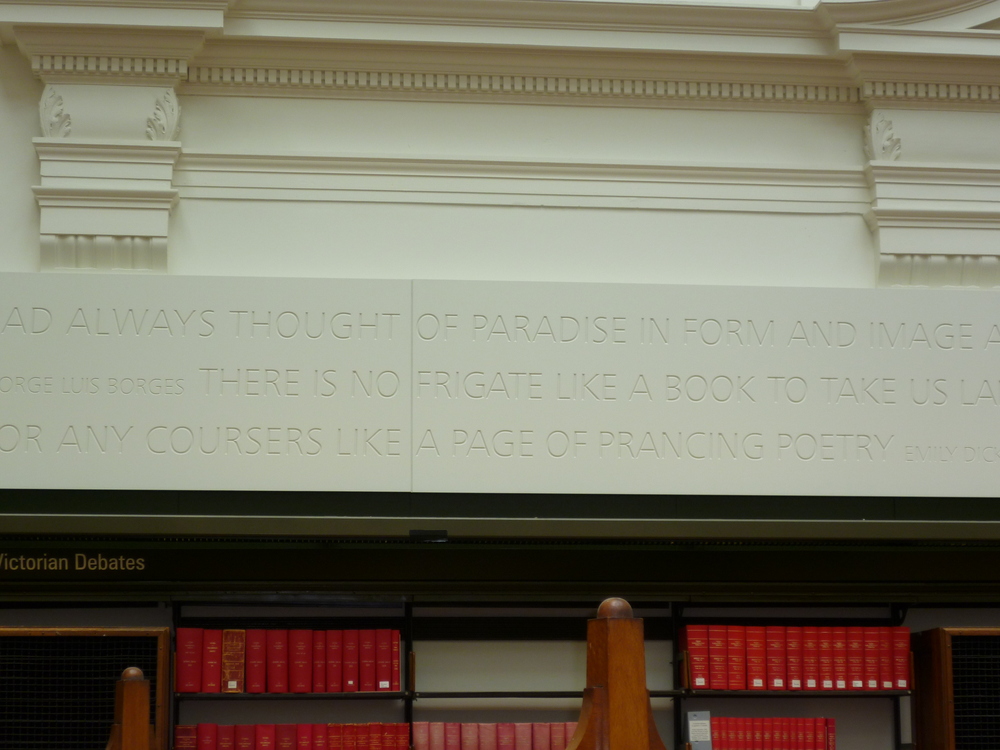
I was here (at the Victorian State Library) in January. They had an excellent exhibition called ‘LOOK! the art of Australian picture books’ on at the time. I liked this quote from Andy Griffiths, author of ‘The Bad Book’: “Setting fire to one’s own body parts is utterly contrary to good sense, good behaviour and the prudent use of matches.”
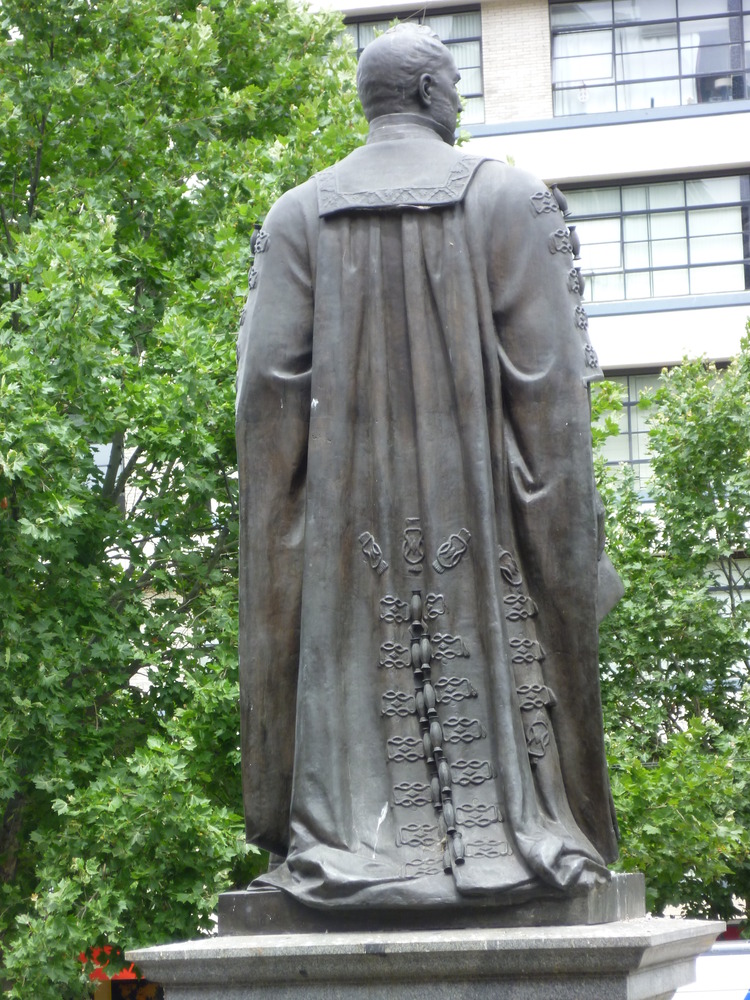
I couldn’t work out why there was a statue of Joan of Arc outside the library though. Quite un-Australian.
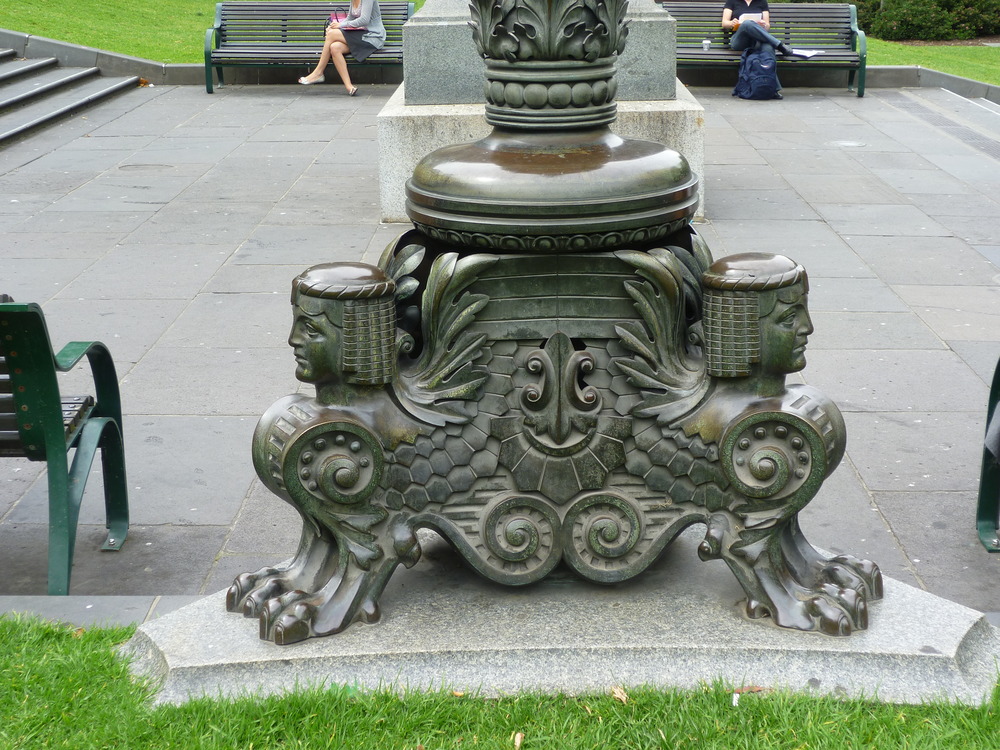











 gryphonelle